



City of Kings: A Journey Through Colonial Lima
Churches, palaces and 500 years of history
Living History
Description
Lima was founded on January 18, 1535 by Francisco Pizarro, and ever since it has gathered more than five centuries of history, visible on every corner of its Historic Center.
From the bus's upper deck you'll get the perfect vantage point to admire the carved balconies, the baroque domes and the grandeur of a city that was once the capital of the most powerful viceroyalty in the Americas.
01 · World Heritage Site
The gems of the Historic Center
It's no empty title: in 1988, UNESCO recognized that Lima holds one of the most important sets of colonial architecture on the continent. Tap each monument to learn more.
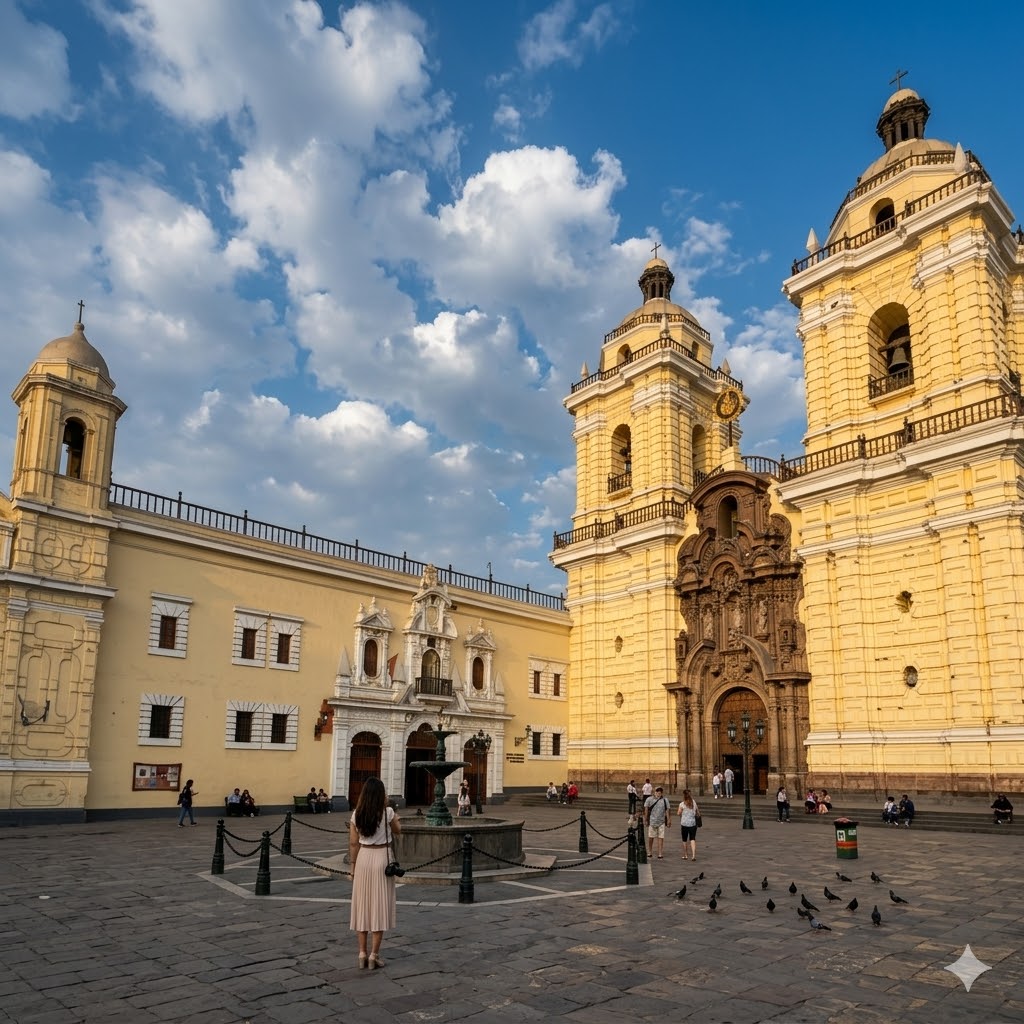
Convent of San Francisco · 1672
Famous worldwide for its underground catacombs, where the remains of roughly 25,000 people rest. Its library preserves a valuable collection of ancient texts from the 16th and 17th centuries, some unique in the world. The central cloister, with its Sevillian tiles, is a masterpiece of viceregal art.
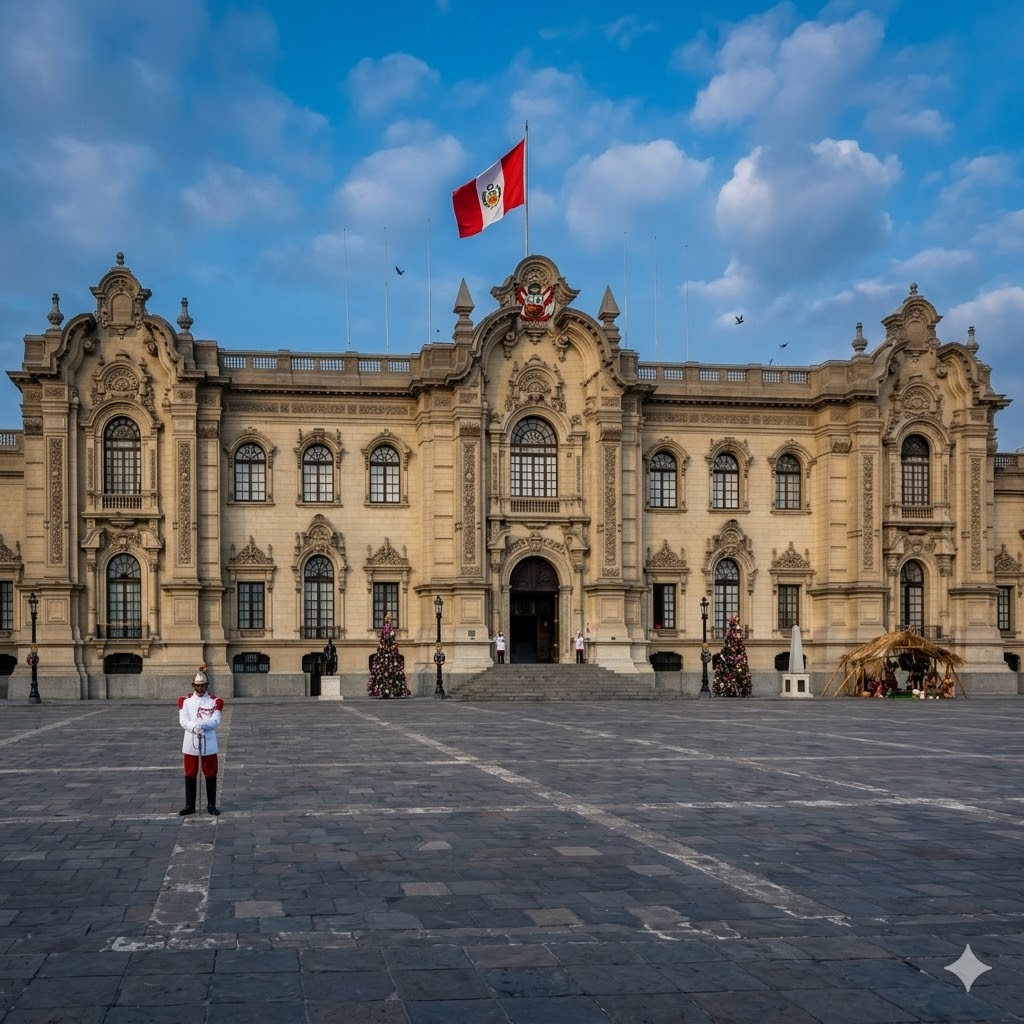
Government Palace · Changing of the guard at noon
Built over Pizarro's former palace, it is today the seat of Peru's executive power. The changing of the guard, held daily at noon, is one of Lima's most striking spectacles: the Army Band plays military marches in front of the Plaza Mayor.
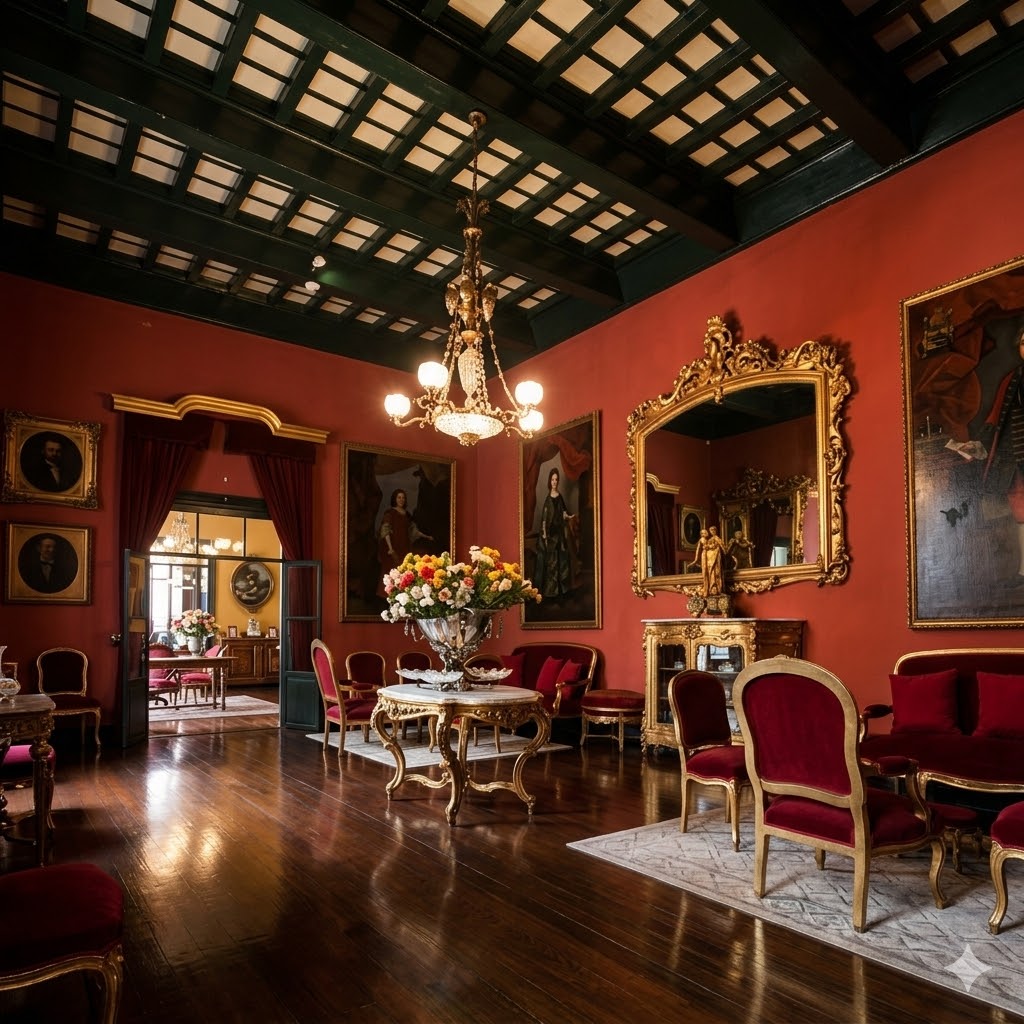
Riva-Agüero House · 18th century
Owned by the Pontifical Catholic University of Peru, it is one of the best-preserved examples of Lima's colonial domestic architecture. Its interior courtyards, carved balconies and art collections make it a must-see.
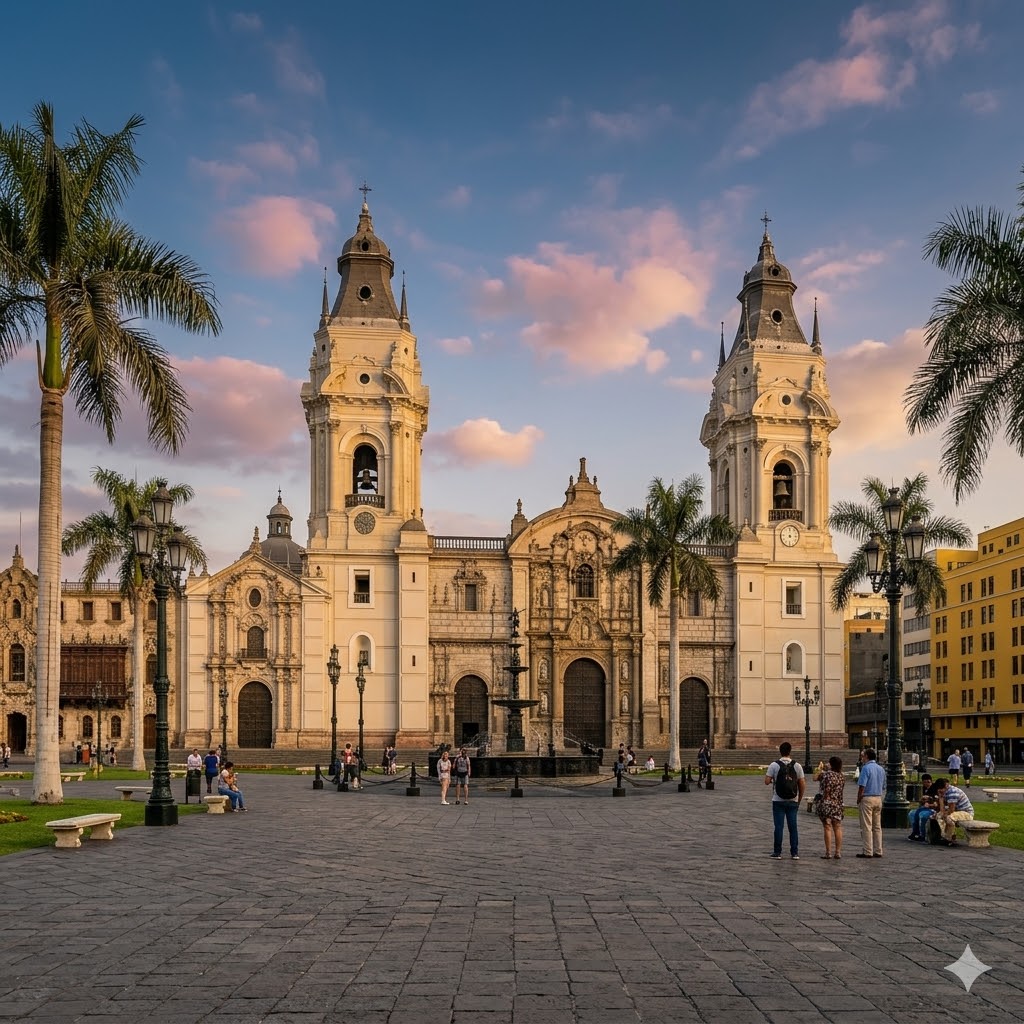
Cathedral of Lima · Since 1535
Its construction began in 1535, alongside the founding of the city. Inside, it holds the alleged relics of Francisco Pizarro and houses an impressive museum of religious art.
Torre Tagle Palace · 18th century
Considered the most beautiful colonial mansion in Lima, this 18th-century palace — with its famous Moorish-Limean balconies — is today the seat of the Ministry of Foreign Affairs.
02 · Art
The viceregal art you should know
Every work tells a story of encounter between European art and the Andean worldview. This is the language that fills Lima's churches and convents:
Cusco School
Mestizo painting that blends European technique with symbols and colors of the Andean world.
Gold-leaf altarpieces
Carved altars covered in gold that dazzle inside the colonial churches.
Coffered wooden ceilings
Carved wooden ceilings of Mudéjar heritage, unique in every temple and convent.
03 · When you hop off at Plaza Mayor
A walking tour from our stop
A ≈ 2-hour itinerary to make the most of the Historic Center step by step, starting right where the bus drops you off.
Admire the 1650 bronze fountain and the colonial arcades.
Visit the interior and the religious art museum.
Admire its iconic carved wooden balconies from outside (neocolonial style, rebuilt in 1924 — unlike the others, it is not viceregal).
Includes the catacombs and the library.
The heart of republican Lima.
ℹ️ Please note: the Cathedral of Lima and the Convent of San Francisco charge a tourist entrance fee and have limited cultural-visit hours. Check official prices and times before your walk to plan your timing.
Five centuries of history await you
Hop off at Plaza Mayor and explore the Historic Center at your own pace. Your next adventure starts here.
Book your pass →View the live map
Questions along the way? Write to us: 908 821 289 · turibus@turibus.pe
Frequently asked questions
At the Plaza Mayor stop. From there you can do a roughly 2-hour walking tour of the main monuments.
The Convent of San Francisco, the Cathedral of Lima, the Government Palace, the Riva-Agüero House and the Torre Tagle Palace, among others.
Yes. Both charge a tourist entrance fee and have limited cultural-visit hours; check official prices and times before you go.
Around 2 hours: Plaza Mayor → Cathedral of Lima → Archbishop's Palace → Convent of San Francisco → Plaza San Martín.
UNESCO inscribed it in 1988 for holding one of the most important sets of colonial architecture in the Americas.